What happens when technical expertise meets design thinking? Vesper Le, a participant in the MaivenPoint Work-Study Programme, reflects on his journey from Vietnam to Singapore, where he learned to connect AI, innovation, and storytelling to solve more meaningful problems. In this blog, he shares how the experience broadened his perspective and shaped his growth.
Before working in Singapore, I was not starting from zero. After graduating from the University of Information Technology (UIT), I spent about three years in Vietnam, moving from product management to growth roles focused on pricing engines, e-commerce search, and NLP systems. Those roles taught me how to ship real AI systems and move business metrics, but they also made one thing clear: If I wanted to keep growing, I needed deeper exposure to a more mature tech ecosystem, a stronger design and innovation culture, and closer contact with global teams.
I started looking for opportunities that combined advanced study with meaningful industry work rather than a pure academic route. That was when I came across MaivenPoint’s Work-Study programme, which offers a two‑year track where you earn a Master’s in Data Science at the Singapore University of Technology and Design (SUTD) while working full‑time at AvePoint Singapore. The idea of studying in a design‑focused AI school and building real solutions felt like the exact next step I was searching for.
Joining recruitment events in Ho Chi Minh City and speaking with program coordinators helped me see that the programme was not just a scholarship, but a full career transition plan. It offered a clear way to carry everything I had built in Vietnam into Singapore, deepen my technical and design skills, and start contributing to larger, more complex problems with support from both a university and an industry partner.
Learning Through Collaboration and Mentorship
When I arrived in Singapore, I realised the next stage of growth was not only about building better models. It was also about learning how to design, frame, and communicate solutions more clearly in a more mature innovation ecosystem. Stepping into Singapore meant entering a larger, more diverse innovation ecosystem.
Taking the study segment of the programme at SUTD, I was not just absorbing theory in a classroom; I was also pushed to think through design, innovation, and real-world application simultaneously. That mattered to me because I did not want to limit the study of AI to a technical discipline. I wanted to understand how ideas move from research to prototype, from prototype to pitch, and from pitch to something that can actually be used.
One of the biggest differences was the mentor-driven and collaborative environment. I was learning alongside classmates, discussing ideas more openly, and getting feedback not only on whether a solution worked technically, but also on whether it was framed clearly and designed meaningfully. That experience helped me think more broadly. A project was no longer just a model, dashboard, or pipeline. It became a story: What problem are we solving, who are we solving it for, and why should they trust this solution?
At the same time, the Work-Study Programme encouraged me to become more hands-on in a different sense. The culture around design and innovation made experimentation feel normal.
You build, test, explain, refine, and then do it all again. That rhythm changed the way I approached learning. Instead of treating technical skill as the finish line, I started treating it as the foundation for clearer communication, better user understanding, and stronger execution.
Turning Technical Work Into Clear Narratives
The programme’s design-and-innovation culture pushed learning beyond lectures into hands-on experimentation.
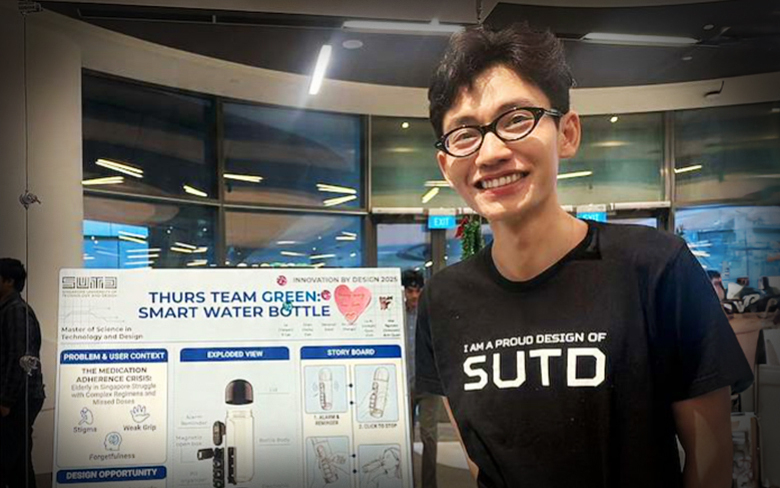
One of the most exciting parts of this journey was pitching final projects — it was more than presenting slides. It was the moment when I had to stand before others and prove my ideas were understandable, useful, and compelling. That process forced me to improve not only my technical thinking, but also my storytelling. I had to explain clearly, defend trade-offs, and show why a project mattered beyond the code itself.
Growing Through Community and Shared Experience
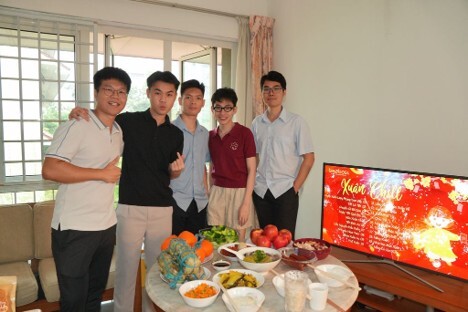
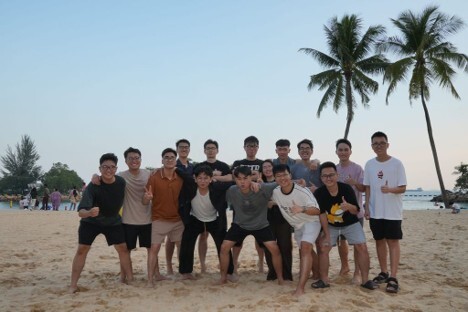
Outside of classes and projects, the community around me also became an important part of my work-study experience in Singapore. Some of the most meaningful learning happened in everyday conversations — with classmates, teammates, and friends who were all building toward something. Those moments made the journey feel less like an individual challenge and more like a shared one. Growth became more sustainable when it was supported by the community.
 |  |
I joined partner events, met practitioners, and continued improving myself outside formal school and work settings. That constant proximity to people who were actively building, shipping, and scaling ideas made a real difference. It pushed me to stay humble, keep learning, and continue investing in myself through communities, conversations, and certifications.
Giving Back and Closing the Loop
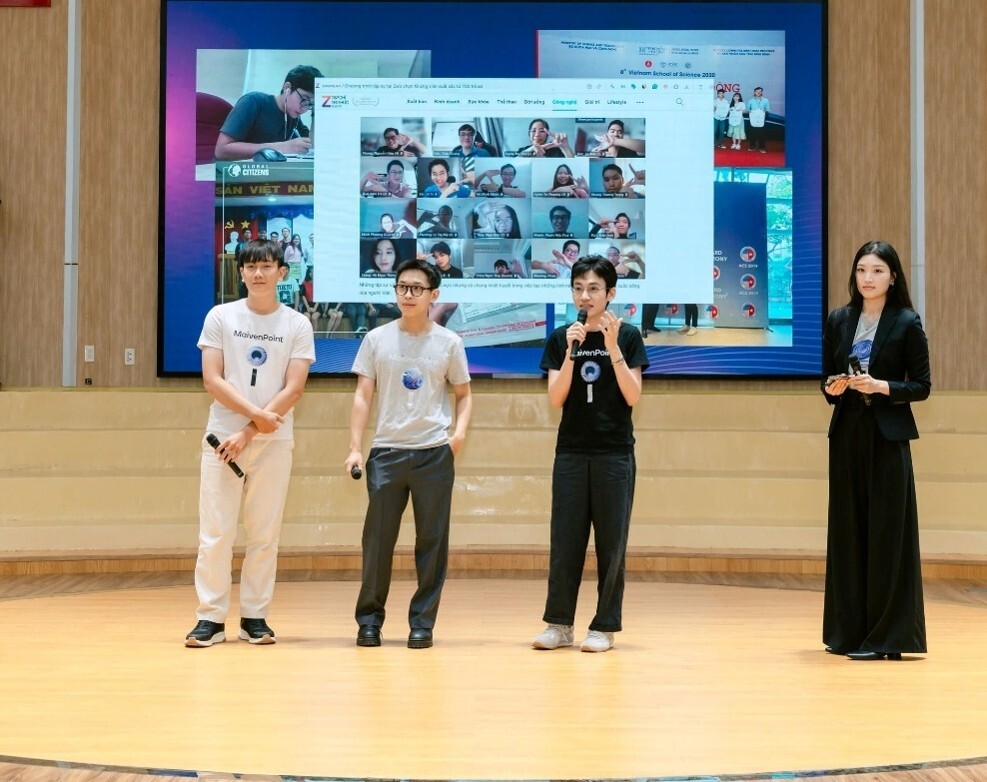
What makes this journey feel especially meaningful now is that it has come full circle. MaivenPoint gave me opportunities not only to learn, but also to speak, share, and give back. Over time, I had the chance to share my own story with colleagues around the world and with students from my former school. Those moments reminded me that growth is not only about individual progress, but also about becoming someone who can return, contribute, and open the door a little wider for others.
When I look back, MaivenPoint did not simply give me a new location to study or work. It gave me a new way of thinking. I came here with experience in product, AI, and growth, but I grew further by learning how to connect technical depth with design, mentorship, pitching, and community. That combination has shaped the kind of builder I want to become: someone who can solve real problems, explain them clearly, and keep learning in public along the way.